

Election year gets blown up: fuel prices rise, reputations plummet
War in the Persian Gulf is bad news for National. But Labour has a leadership deficit.

New Zealand’s Election 2026 has been blown wide open, and it’s only March. National’s leadership is being tested by a global energy crisis; Labour’s leader was ankle-tapped by his own reputation.
Prime minister Christopher Luxon may have felt relief when the latest RNZ–Reid poll didn’t see National under 30. On only 30.8%, however, they were trailing Labour by nearly five points. Luxon’s net approval rating is in the red, although Chris Hipkins isn’t far behind him on that slippery slope.
That Reid poll was done 12–20 March, mostly before Hipkins got hit by a scandal, and while gas prices were rising.
Both of the contenders for PM are shedding leadership capital. And the fine balance in opinion polls between the left and right coalitions is set for disruption. A solid crisis can make or break a government (just think of Labour’s ups and downs in 2020 and 2023 as Covid raged). A lot depends on how such crises are handled, but it makes the road to the next election slipperier for everyone.
How is the government responding to high oil prices?
Luxon signed up last week to a statement with other political leaders jointly condemning Iran’s attacks on vessels and energy infrastructure in the Persian Gulf and the effective closure of the Strait of Hormuz, which is squeezing global energy supplies.
The Strait isn’t totally “closed”, according to Lloyd’s List. Passage is restricted to vessels approved by the Islamic Revolutionary Guard Corps on the Iranian side. Others won’t run the risk, in part because of high insurance costs or no insurance. The Iranian government blames this situation on “those who initiated and continue this unlawful use of force,” i.e., the American and Israeli governments.
Posting on X, Luxon said that the attacks were “leading directly to higher fuel prices for Kiwis”. He didn’t call for Trump and Netanyahu to lay off. But his call for Iran “to cease immediately” its drone and missile barrages and to respect the freedom of navigation will go unheeded by whoever’s in charge there now.
What’s more, Luxon & Co have to worry about higher fuel prices leading directly to defeat in the November election.
A study from the Harvard Kennedy School using data from 207 elections in 50 democracies (including NZ) found that “oil price increases systematically lower the odds of reelection for incumbents”. “An increase in oil prices is found to reduce consumption growth and hurt the chances of incumbent reelection one year later.” This affects both left- and right-wing governments, so ideological pleading about prowess as an “economic manager” won’t help. And the lag from now till November may only make it worse.
This isn’t an Iron Law of Politics, though – it’s about the odds or chances based on past experience. A force in favour of the Luxon government could be a “rally round the flag” effect. A lot depends, then, on crisis management.
Luxon’s statement on X was silent about the thousands of people who’ve been killed or displaced before and during this intensification of the war between Iran and America/Israel. Well, he’s thinking of New Zealand first (pun intended).
At my local gas station, between 5 March and 22 March, a litre of 91 had risen by 56 cents. Filling a tank with 40 liters meant $22.40 less for other household expenses. Depending on how much a family uses a petrol-powered car, or two, that can mean a lot. The prices of just about everything else will rise as well. Finance Minister Nicola Willis ruled out reducing the fuel excise tax.
Luxon and Willis forged ahead with a temporary income-relief package: an extra $50 a week for those who qualify for the in-work tax credit, available from April 7 for an estimated 150,000 families. This targets low-income working families, not beneficiaries. It costs up to $373 million, paid for from the operating allowance, and won’t add to debt.
Opposition leader Chris Hipkins declared that the government needs to step up and lead the country through “another once in a generation crisis”. But how many once-in-a-generation crises can New Zealanders cram into one generation? He added that, when he was in government fighting Covid-19, Labour “didn't even care what they [the opposition] were thinking”. Now that he leads the opposition, does the government care what he’s thinking?
Hipkins suggested no constructive policies. In contrast, the Green Party offered their votes to National to push through a relief package of six policies, beginning with free public transport. If the Greens have ideas, why doesn’t Labour?
Hipkins had earned himself this rather pointed headline in the NZ Herald.
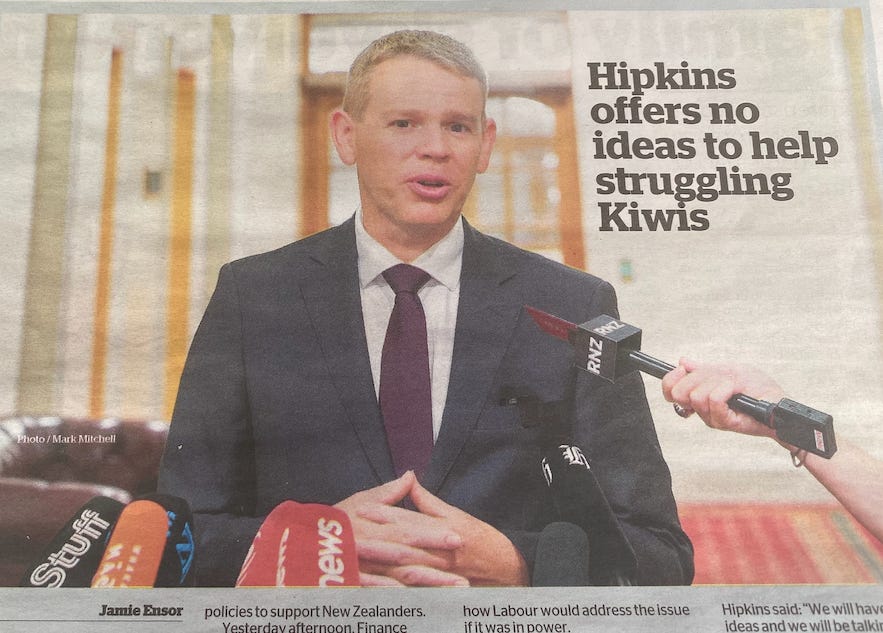
It was ironic to see National target relief to low-income families (Labour’s traditional constituency) while Labour tried to estimate how much more revenue the government might get from GST on higher-priced fuel sales, even though it’s hard to predict the offsetting effect of people spending less on gas and/or on other consumer items. Household budgets aren’t unlimited.
The leading political question in New Zealand concerning war in the Persian Gulf has shifted away from whether the government opposes or supports the American/Israeli assault, or sits on the fence. The question now is how to deal with rising energy prices, as this threatens the government’s chances of re-election and affects household budgets.
On the back of public disappointment in the Luxon government, the Labour Party have been enjoying a steady rise in the polls, up from 26.9% in the 2023 election into the mid-30s, often ahead of National.
The rise in fuel prices theoretically favours a change of government, so Labour may be happy about that. But, unlike the Greens, they haven’t taken the initiative on this occasion.
Hipkins may feel stymied by the damage done last week in a social media post by his ex-wife. Having said in January 2023, when he took over from Jacinda Ardern, that he wanted “to keep my family completely out of the limelight”, Hipkins had done the exact opposite, pushing family, children and fiancée out onto the covers of two popular women’s magazines. Now that the cloak’s been soiled, it’s away at the drycleaner. Meanwhile, Labour’s apologists are appalled that anyone is even talking about Chris’s family life. Don’t we realise there are children involved?
Incompetence and lies get punished by voters, but it really gets people’s backs up when a leader demands of others standards higher than they live up to themselves.
The road to 7 November is looking treacherous – almost as risky as navigating the Strait of Hormuz.
The Americans have mid-term congressional elections on 3 November, while Israel is due for a parliamentary election on 27 October. It will be an interesting two weeks.
Note for readers: Next post, I’ll have a closer look at Winston Peters’ recent state of the nation speech and write about what it means for the coming election.
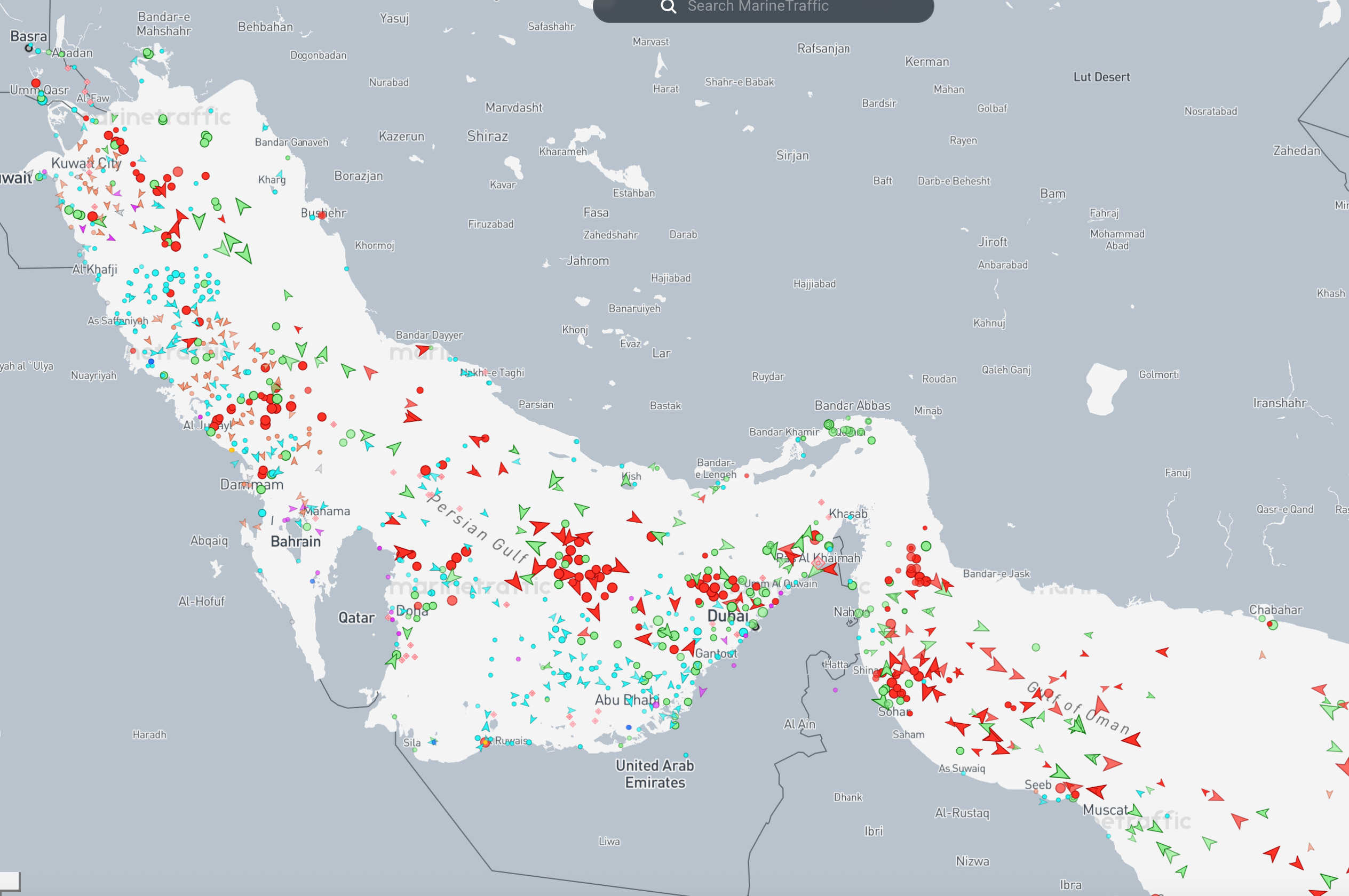
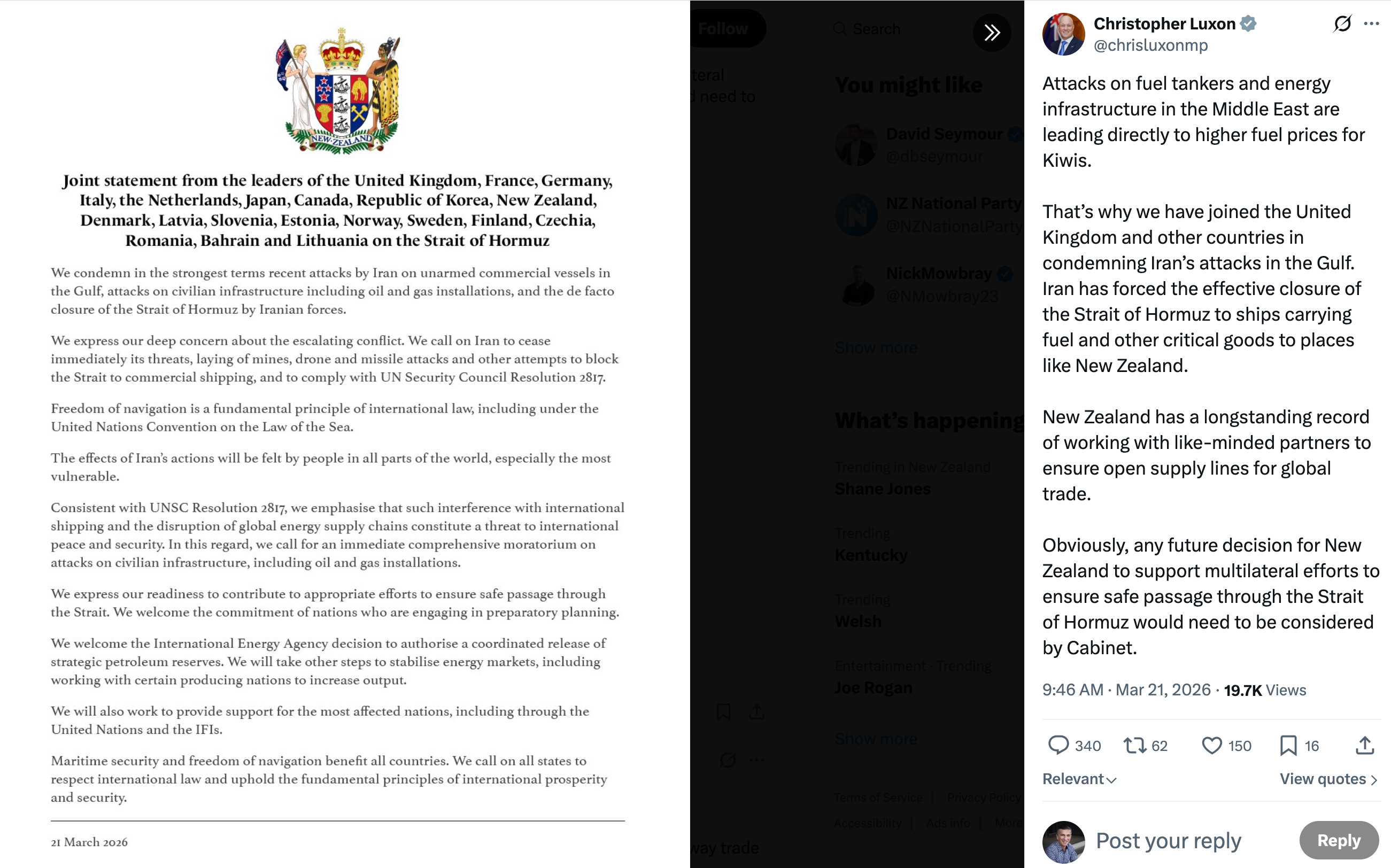
I don’t think Geography’s Trump’s strong point. One good thing to come of it may be encouraging the shift to renewables.
I have to admit - even though it’s disastrous for the world economy - and the Iranian regime is brutal towards dissent - I’m kind of enjoying watching the Iranians squeezing Trump’s balls by stopping navigation of the Straits of Hormuz. Once again the US leadership has assumed that overwhelming firepower will make it risk-free to attack a developing country (even more odious, it was a surprise attack while negotiations were in progress) - and once again they seem to be suffering for their hubris. Unfortunately the whole world is suffering with them, not just American voters. But perhaps countries like Australia and Aotearoa, whose governments haven’t spoken out to condemn the Gaza genocide or this illegal war, deserve a share of that suffering.